How FAroGels is governed
FAroGels uses a clear and collaborative governance model to coordinate research, doctoral training and communication activities across the consortium. Defined responsibilities and regular review mechanisms support informed decisions, timely responses to emerging risks and consistent standards throughout the project.
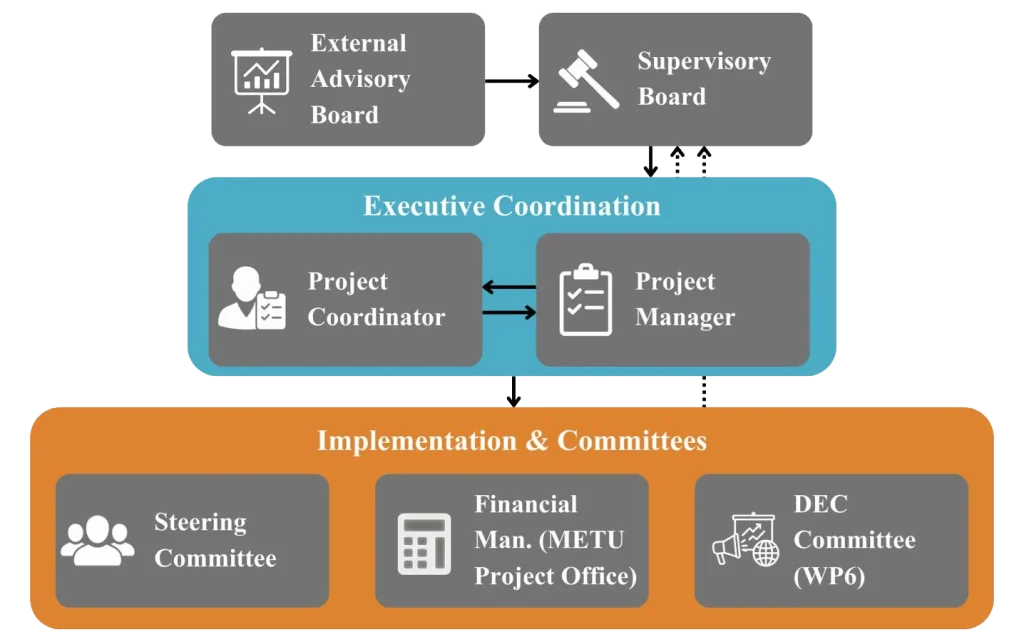
Middle East Technical University (METU) leads project coordination through WP1 – Management and Coordination. Strategic oversight is shared among the Project Coordinator, the Supervisory Board, the Steering Committee and independent advisers, while specialist responsibilities are integrated into the relevant Work Packages.
Connected governance
Clear responsibilities, regular progress reviews and coordinated decision-making connect project management with research, training and pathways to impact.
Project Coordinator
Project coordination

Prof. Mecit Halil ÖZTOP
FAroGels Project Coordinator
Middle East Technical University (METU)
Ankara, Türkiye
Prof. Öztop guides the overall implementation of FAroGels and chairs its Supervisory Board. He represents the consortium in formal exchanges with the European Commission and the European Research Executive Agency (REA), while working with the project management team to align reporting, research delivery and doctoral training across the network.
Project Manager
Project manager
Project Manager (PM) is responsible for the day-to-day management of FAroGels. Based at METU, PM works closely with Project Coordinator and the Supervisory Board to keep recruitment, training, mobility and reporting running smoothly across the network, and supports the consortium’s internal communication and documentation.
PM is a first point of contact for partners, supervisors and doctoral candidates.
Governance structure
FAroGels combines consortium-level oversight with operational coordination. Each governance body has a defined role in decision-making, implementation, monitoring and independent review, helping the network remain accountable and responsive throughout the project.

Supervisory Board
Chaired by the Project Coordinator, the Supervisory Board provides strategic oversight and serves as the project’s principal decision-making body. It reviews progress across research, training and mobility, and considers key matters relating to recruitment, secondments, resources, milestones and deliverables.

Steering Committee
Bringing together the Work Package Leaders, the Steering Committee coordinates implementation across the scientific and technical programme. It reviews progress against Work Package objectives, identifies emerging risks and cross-package dependencies, and prepares consolidated input for project-level decisions and reporting.

External Advisory Board
Independent of day-to-day project management, the External Advisory Board reviews scientific progress, doctoral training and the network’s broader direction. Its feedback provides an external perspective and supports the Supervisory Board in identifying priorities and opportunities for improvement.

Quality, Risk and Compliance
WP1 maintains a project-wide approach to quality assurance, risk management and compliance. Scientific outputs, training milestones, supervision and researcher well-being are monitored alongside ethics, data-management and regulatory responsibilities, allowing concerns to be identified early and addressed through proportionate action.
How governance supports the network
Regular reporting, structured reviews and clearly assigned responsibilities connect strategic oversight with day-to-day implementation. Together, these arrangements help partners coordinate research, training, mobility and communication while maintaining quality, responsible conduct and appropriate support for all 15 doctoral candidates.